
Mobile County Neighbor Record Layers
Finding Mobile County neighbors calls for several narrow sources. Start with geometry, then identify each parcel separately. An assessed owner is a public tax fact, not proof of every person at the address. A registration record is dated evidence with legal limits. Community organizations tell residents how to take part nearby, but their public contacts are not a household roster.
| Block source | What it shows nearby | Access |
|---|---|---|
| Revenue parcel viewer | Parcel shape, adjacency, and jurisdiction context | Free interactive map; click and browse |
| Revenue eSearch | Assessed owner, situs, mailing destination, parcel/key, exemption, neighborhood | Free address or parcel search |
| Probate Landmark | Recorded parties and earlier subdivision transfers | Free registered index; paid document images |
| Permit or enforcement file | Work or reported conditions at a city address | Portal, 311, counter, or record request |
| Voter information | Lawfully available registration and election geography | Personal lookup or ordered list with limits |
| Historical directory | Past householder and address associations | Mobile Public Library, with year gaps |
The strongest result is modest: a dated set of nearby parcels, their assessed owners, and any separate facts that can be verified. It is not a live list of all occupants. Mobile County's records are useful because their roles are distinct.
Map Mobile County Neighbors
The adjacent-parcel method begins with one known address. Mobile County's GIS hub provides the spatial view; eSearch provides the assessment details. The public research supports clicking and browsing neighboring polygons, but it did not verify a radius or buffer tool. Keep the workflow within those known features.
- Open the Mobile County interactive maps hub and locate the target address or parcel.
- Click the parcels that share a line, corner, or the opposite side of the street. Record each address, key, or parcel identifier exposed by the viewer.
- Enter every identifier separately in the Revenue Commission Property Search. Note the tax owner, situs, mailing destination, neighborhood, and exemption facts.
- Compare situs with mailing address. A match and homestead evidence can support owner occupancy, but neither names everyone who lives there.
- Check jurisdiction before seeking a permit, enforcement record, or local organization. Postal Mobile is not the same as municipal Mobile.
Expand one ring at a time. A block inquiry should stay tied to visible parcels rather than an assumed distance. For a full named road and its deed chain, switch to the Mobile County street directory, which owns the street-wide method.
Note: GIS boundaries aid research and parcel selection, but they are approximate map context rather than a recorded survey.
Mobile County Neighbors Are Not Owners
The tax roll myth causes the largest block-search error. Property records list assessed ownership. They do not list each neighbor. The mailing address may route tax notices to an estate, business, agent, or owner living somewhere else. Renters, relatives, roommates, and recent arrivals can be absent. Alabama's October 1 assessment date can also leave a later transfer under the seller for that tax year.
Use careful labels in notes: “assessed owner,” “mailing recipient,” “registered voter,” or “directory occupant.” Never collapse them into “resident.” A homestead flag can support owner-occupancy eligibility, but it still does not describe a full household. If a deed is needed, Probate Court's Landmark index can confirm the recorded transfer and legal description.
Insider tip. Search only the street name when an exact eSearch address fails, then identify the correct parcel by its map position and key number.
Place Mobile County Blocks Correctly
Postal Mobile, the City of Mobile, and Mobile County do not share one boundary. Blocks in Prichard, Chickasaw, Saraland, Satsuma, Semmes, Bayou La Batre, Coden, and other communities may need a different local route even when nearby mail uses a familiar city label. The county's 1,644 square miles also include coastal, rural, and unincorporated places where county offices lead.
Check the jurisdictional map before calling about a permit or street condition. Inside Mobile, Municipal Enforcement takes 311 reports for dangerous buildings, excess vegetation, minimum-property issues, refuse, zoning, unpermitted construction, pools, vehicles, and obstructions. Outside the city, the unincorporated building-permit contact is at 1110 North Schillinger Road, Suite 100, 251-574-3507. When no public case search exists, contact the counter or make a narrow request for an identified address and date range.
Mobile County Neighbor Organizations
The City of Mobile publishes a neighborhood-organization resource, and local material names more than eighty Community Action Groups historically. The researched sources did not establish a current master directory of every association, HOA, member, or household. Public groups should be used to learn meeting contacts, projects, events, and civic boundaries, not to infer private membership.
City neighborhood resources
The Neighborhood Development organization page is the official entry for city community contacts and organization support.
Africatown community groups
The 2026 city resource guide names Africatown Community Development Corporation and Africatown Heritage Preservation Foundation as community-layer sources.
Local history help
Mobile Public Library Local History & Genealogy holds directories, newspapers, church records, maps, and other sources that add historical block context.
The official neighborhood-organization resource shows where the community layer begins.
Use the public contact path to join civic activity or confirm a group's scope, while respecting that organization contacts are not a resident roll.
Africatown Neighbors and Community Archives
Africatown has an added community-archive layer. The McCall Library's Africatown guides, oral and photo materials, and local organizations can connect names, events, families, and places that a tax card cannot explain. These collections matter because the neighborhood's Clotilda descendants and community history are documented through more than land ownership.
Organizational papers may contain rosters, but access and privacy must be checked with the repository. A public event notice does not prove residence. Pair a dated archive item with an address-bearing directory, deed, census, burial record, or newspaper before making a historical link between a person and a block.
The Magnolia Cemetery source provides another local record path for deceased Mobile residents.
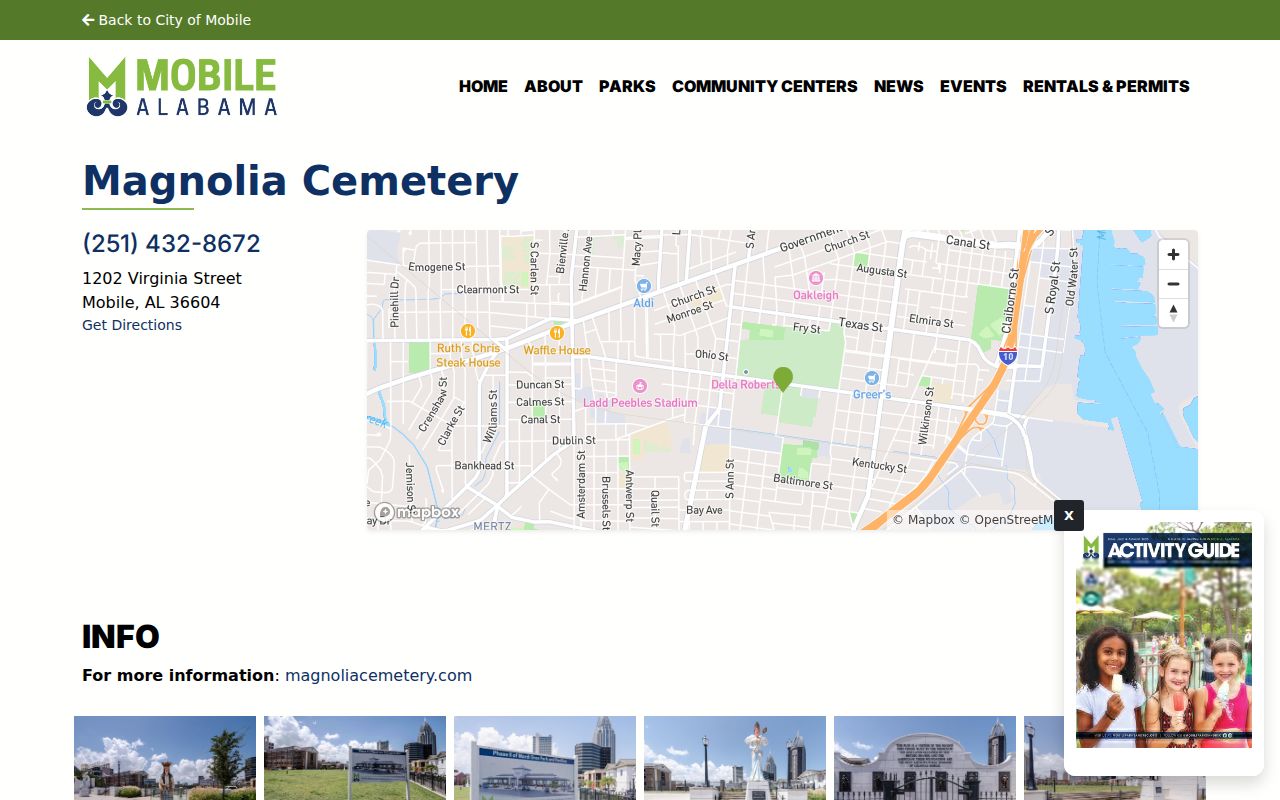
Burial material can close a family-history trail, but it should not be treated as a present-day block directory.
Mobile County Neighbor Voter Limits
Alabama My Voter Page is designed to confirm the querying voter's own registration, polling place, ballot status, and recorded district or address after an identity match. It is not a public block browser. A broader list is ordered from the Alabama Secretary of State under Ala. Code §17-4-38, with county, city, or district scope selected on the request form and a quote supplied before fulfillment.
Public list fields can include name, residence or mailing address, status, registration geography, and election participation. Participation says whether a ballot was cast, not how anyone voted. Social Security numbers, license or ID information, full birth dates, and protected addresses are withheld. Address confidentiality protections, recent moves, inactive records, and data formatting prevent a list from being a complete neighbor census.
For an address correction, contact the Mobile County Board of Registrars at 151 Government Street, Room 165, or 251-574-8586. The office is open weekdays from 8:30 a.m. to 4:30 p.m. A mismatch is a reason to verify, not a reason to accuse.
Mobile County Neighbor Source Choices
Official records and commercial neighbor compilations do different work. The official source names the custodian and the date or legal role of the fact. A commercial compilation may combine old addresses, inferred relatives, and reused public material without showing which claim is current. It can be stale, and it is not authoritative.
| Source type | Strength | Limit |
|---|---|---|
| Revenue and GIS | Direct parcel and assessment context | Ownership is not full occupancy |
| Probate index | Recorded party, date, and land description | Index is not the certified instrument |
| Voter source | Official registration fact under state rules | Not a public block browser; protected records omitted |
| Community group | Current public contact and civic activity | Not a household or membership roll |
| Commercial compilation | May suggest a lead | Source date and accuracy may be unclear |
Mobile County Probate offers a free Landmark Fraud Alert that emails when a land record is filed under a monitored personal or business name. It is a property-safety tool, not proof that fraud occurred. Register name variants separately.
The Landmark Fraud Alert form shows the official enrollment route.
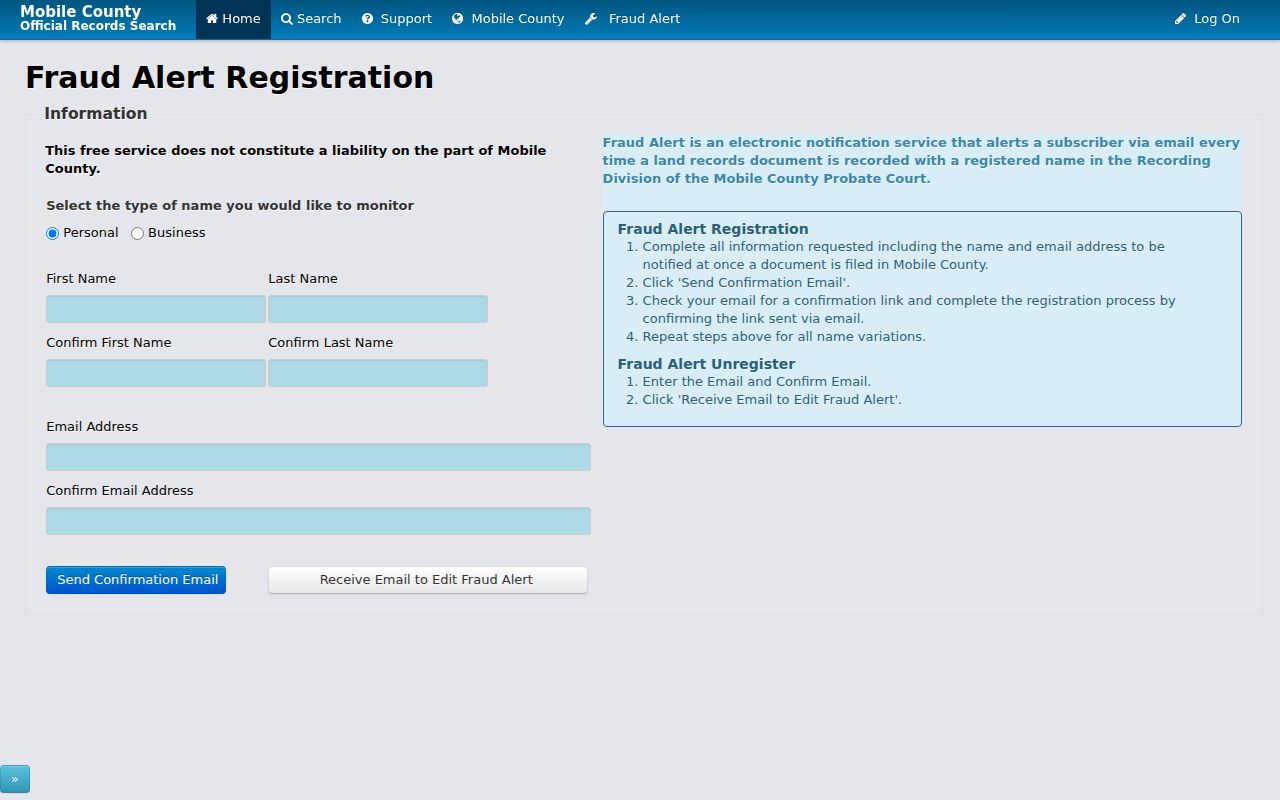
The alert complements parcel research by watching recorded names after the initial block lookup.
Protect Mobile County Neighbors
Some block information stays private by design. Utility and delivery customer lists are not resident directories. Motor-vehicle personal data is restricted. Renters and household members are not indexed as a group. Alabama's Address Confidentiality Program and record-specific laws protect qualifying people, and voter protections can suppress an address.
Mobile County Probate accepts lawful requests to block Social Security numbers or birth dates and qualifying-position redactions under state law. Its identity-theft resources explain that process. Adoption, mental-health matters, most judicial documents, living wills, and military discharges also face online access limits or eligibility rules.
The Probate identity-theft resource is the official starting point for redaction help.
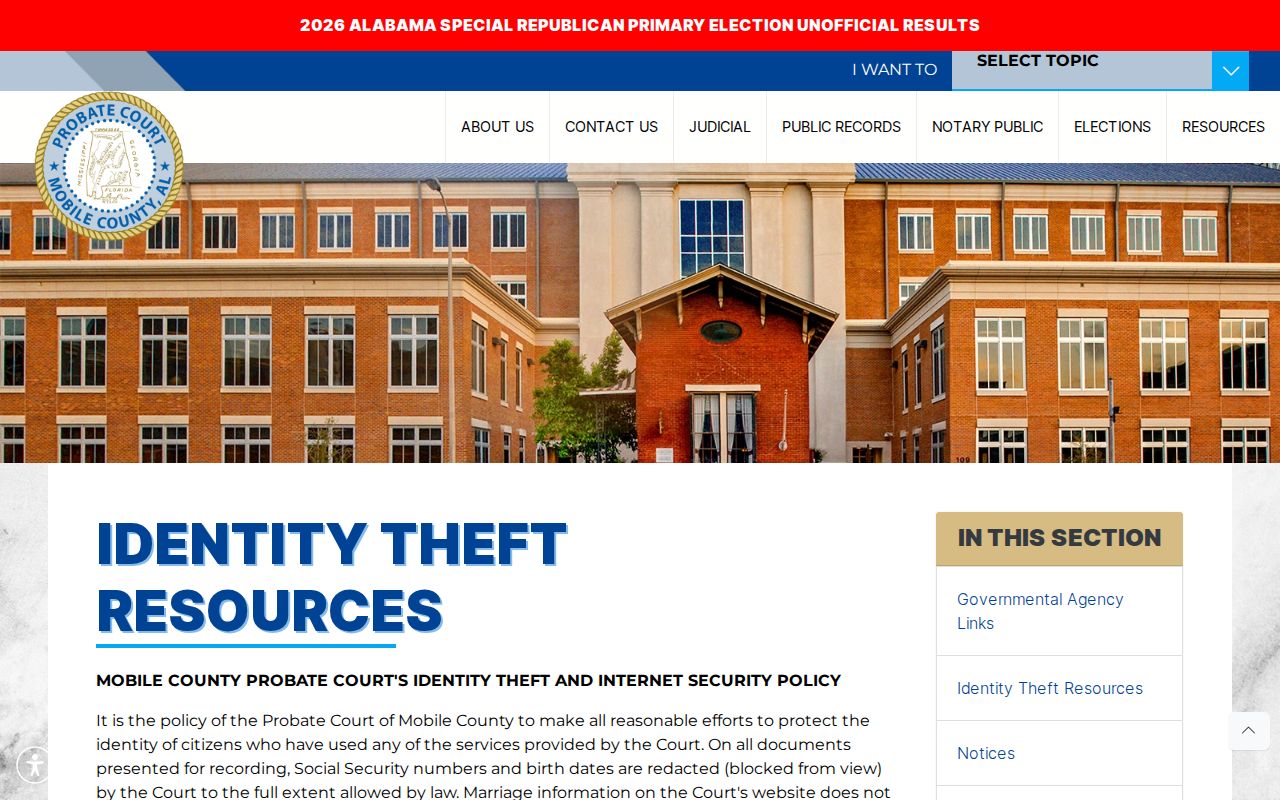
Corrections and redactions belong with the custodian; removing a commercial copy does not change the official record.
Lawful use. Look up Mobile County neighbors for civic contact, genealogy, reconnecting, or personal safety. Never watch, stalk, harass, threaten, or harm another person.
Mobile County Neighbor Lookup Fallbacks
Online gaps are common. The GIS viewer's full tools were not verified, the permit shell depends on JavaScript, and no authoritative countywide HOA roster was located. When a portal stops, call the division, visit the public counter or terminal, send the custodian's narrow form, and then use the Alabama Open Records Act for an identified existing series. Historical questions can move to Mobile Public Library, Municipal Archives, McCall Library, or the Alabama Department of Archives and History.
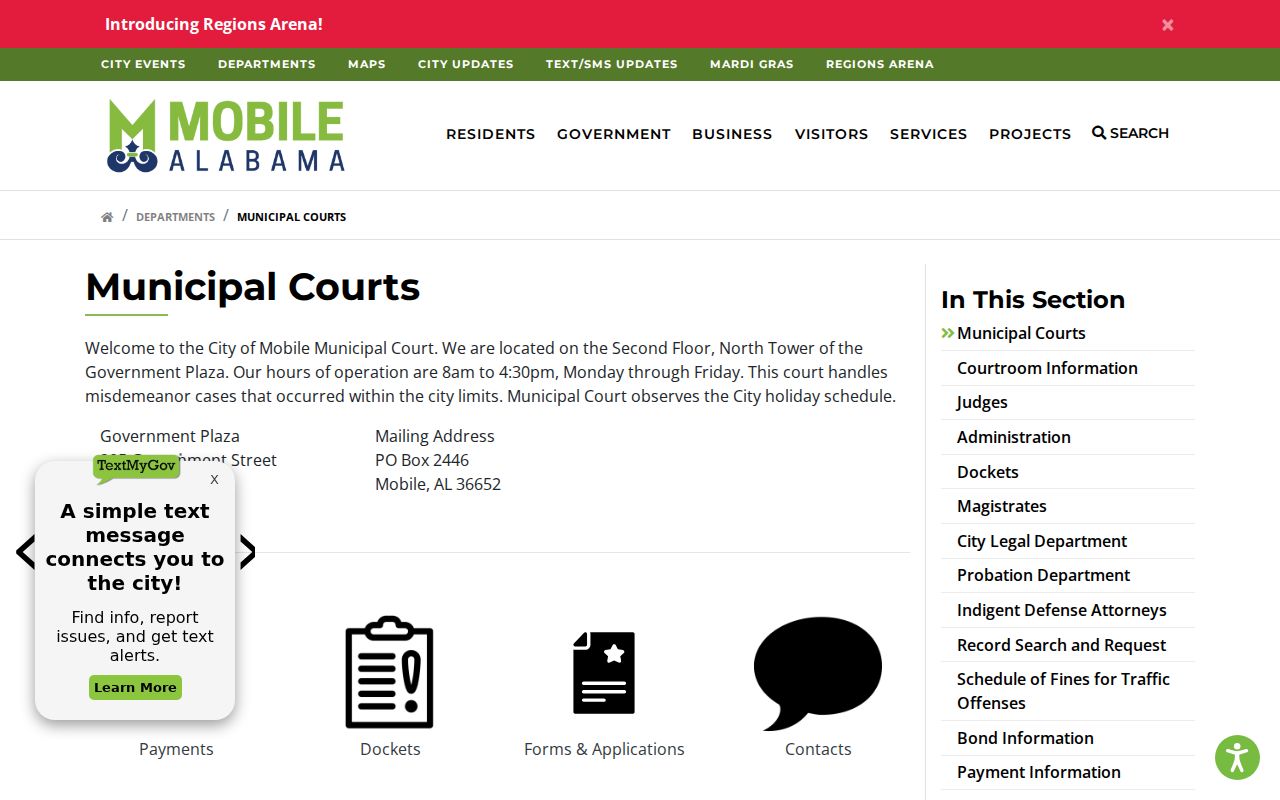
Municipal Court records are another example. The City of Mobile Municipal Court handles city-limit misdemeanor matters, but no public party-name index or online coverage run was found. Contact the court at 205 Government Street, second floor North Tower, 251-208-7055, on weekdays from 8 a.m. to 4:30 p.m., or use a written request.
The Mobile Municipal Court source provides the official contact and service route.
This counter-first route is more accurate than treating a missing web result as proof that no record exists.